Wednesday, 12 September 2012

Just cos it's in a tent, does it have to be camp?

pic by @bryan_gb
It's Oktoberfest season here in Germany – and yes, it is still September here too, it's called Oktoberfest because it ends in October. All over the country, what might once I suppose have been harvest festivals have become local imitations of the Munich original, complete with Bavarian beer, blue and white bunting, and of course silly hats.

Lüneburg's version is quite early, small and short – just four days, finishing yesterday (when the Munich one doesn't open until the 22nd), and only one giant beer tent. Presumably the tent will now be taken down and moved somewhere a bit bigger for another Oktoberfest next weekend.

It's not just the beer tent though – there's also assorted fun-fair stalls and children's fairground rides, places to buy various kinds of hot and cold food, and there are lots of other outdoor bars. Fittingly, most of the other beer on sale was northern, with Duckstein (now owned by Carlsberg, and I believe brewed at the Holsten site in Hamburg) the most prominent. Also around were Holsten and Lüneburger Pilsners (both also from Carlsberg/Hamburg), and AB-InBev's Diebels Alt, though by the look of it the latter was only available as an “Alt Bowle” which is a beer cocktail or punch, complete with chunks of fruit.

When we finally reached the big tent late on Sunday afternoon, a pair of entertainers were banging out versions of 60s/70s Country classics – Sweet Caroline, Country Road, that sort of thing – to a small but reasonably appreciative crowd. After they went off stage things got a little odd, when a rather fey chap who appeared to be a member of the audience took the mike and started singing. His voice was good, not great, but it was abundantly clear that he knew how to use a stage.

Anyway, we were about to finish our beers – Löwenbräu Oktoberfest, which was competent; the alternative was Franziskaner weiss, and both are now AB-InBev properties – and head home for something with a bit more depth of flavour, when I spotted that the menu also listed the weekend's entertainment, and Sunday night was a "Travestie Show", ie. a drag cabaret...

pic by @PsycheDK
I've seen some strange things at beer festivals, but this pretty much takes the biscuit. The highlights, if one can call them that, were a rather tubby transvestite doing fart jokes while impersonating Benny Hill's impersonation of Nana Mouskouri(!), and a much slimmer and very glam colleague (seen here – I'm pretty sure this was the fey chap from earlier) dancing with one of the lads from the big macho table in the middle. Laddie didn't seem to need much persuading, mind you.

My Danish friends and I observed that it was all extremely odd – and very German. “Very Bavarian, more like,” sniffed a local.

Tuesday, 4 September 2012

Why Germany needs a beer consumers group

My post last week, suggesting that German beer had become samey and was increasingly being made to a lower budget, stirred up a lot of comment, quite a bit of it along the lines of “Oh, you just need to go to Bamberg/Cologne/my local/etc.”

Perhaps I should have qualified my comment and said “mainstream German beer is suffering”, but the warning that I was trying to send covers the good stuff too. The warning is that if German consumers don't look beyond their locals and favourites and their cosy assumptions of greatness, the multinationals will grab more and more. Then they will gradually do what multinationals always do, which is to dumb things down for the sake of profit and dominate via marketing not quality.

I certainly wasn't trying to say there are no good beers in Germany – there are lots (just as there were still real ales in Britain in 1971). Most are only available on draught in their home region, as is typically the case with Kölsch and Alt for example, although if you are lucky you will also find some of them in bottles further afield. There are also lots of local breweries and brewpubs – and many thanks to Renate for pointing me at Die Freien Brauer, which for British readers is a society for independent family brewers, rather like Britain's SIBA, and then again to this article from Der Spiegel, about new microbreweries in Berlin (only in German – but Google Translate makes a decent fist of it).

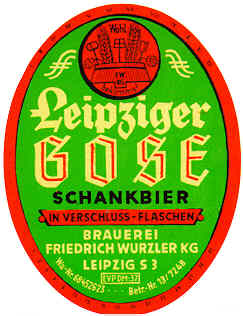
There are welcome signs too that some of the regionals and the newer breweries are trying to differentiate themselves – offering their Pils cloudy and unfiltered (a form of Kellerbier) say, or adding a dark Pils, or reinventing older styles such as Zwickl and dark lager. Some have added extra seasonals as well, such as Maibock or Frühlingsbock (Easter bock), and a few have revived once-extinct styles such as Gose sour ale, in Leipzig.

German beer as a whole has been left behind though, and certainly isn't the best in the world now, if it ever was. Quite often, what a regional brewery or a brewpub produces is the regulation Pils and/or Weizen, plus maybe one or two others. And even that isn't what most people drink, especially outside Bavaria – that's the produce of the big boys, the Oettingers, Krombachers and Bitburgers, the mass-produced, crisp yet one-dimensional beers. The entire membership of the DFB brews less beer than Oettinger, for example.

And it's the “little green bottles from Prussia” slagged off by the author of this article from Süddeutsche Zeitung (again, in German – and GIYF). He also slates the sameyness of the big beers, along with brewery ties and marketing that limit choice on the bar, and the lack of imagination that leads to beer being drunk to get drunk rather than for enjoyment.

All this is why Germany needs a beer consumers group – to educate people about how wonderful German beer can be if it's made right, and support those brewers that are doing it right. Sure, the newspapers will do a bit of this every once in a while, but a consumers group can take it to the next level.

The other reason why Germany needs a beer consumers group is to ensure that the government doesn't just hear the voices of the big brewing businesses. Sure, organisations such as Die Freien Brauer can do some of this, but they could do a lot more with the backing of a genuine grassroots consumer group.

So, how about it – what needs doing, and who ought to be doing it?

Monday, 3 September 2012

Been shopping? No... I've been shopping.

We've got beer-loving visitors coming over next weekend, so I thought I'd quickly stock up on quaffables. Nothing too special yet, as the nearest specialist beer shop's some way away in Hamburg. Just the interesting stuff they keep tucked away at the back of the Getränkemärkte, hidden behind the serried rows of Pils and Radler. Here's a list:

Andechser Doppelbock Dunkel - the 4th best beer in Germany according to Ratebeer users, and the best according to me.
Mönchshof Kellerbier - slightly cloudy, malty and delicious, a classic German bitter (to my mind, anyhow).
Einbecker Ur-Bock Dunkel - the original bock from the home of the style, Einbeck. Malty, chewy and lightly bitter.
Flensburger Dunkel and Dithmarscher Dunkel - two classic north German dunkels. Roasty and malty with a bit of burnt bitterness.
Oettinger Schwartzbier - a pleasant roasty black beer with fruitcakey notes, and absurdly cheap at 45 cents a bottle.

I'll try to get to the bigger Getränkemärkte on the other side of town later in the week, to see if there's anything more unusual there.

Monday, 27 August 2012

Meanwhile in German beer, it's 1971 all over again...


I'm curious – do you think of German beer as aspirational, or worthy of emulation? Or is Germany merely one of the places you go to when you feel like drinking a properly-made lager?

It's funny how things come together every now and then. Just recently I was chatting (on Twitter – O tempora o mores!) with Old Worthy brewer Nick Ravenhall about my experience of beer here in Germany, and in particular how little variety there is. More on that later – I've a fairly long article in the process of drafting – but his comment that it sounded “maybe like the UK 20 years ago” made me think.

I didn't reply straight away though, as I was wondering if 20 was the right number. Then today along came a blog post from Boak & Bailey in which they quote the April 1972 edition of the British consumer magazine Which? on keg beer:

“…none smelled very strongly in the glass — none was either unpleasant or very pleasant. As far as taste went, the overwhelming impression of our tasters was that none of the keg bitters had any very characteristic taste… we also carried out a standard laboratory test for hop-bitterness. These results confirmed how similar the keg beers were.”

It immediately reminded me of another article earlier this year, reporting on a German TV programme which openly said the unsayable: that German beer has become samey, is made to a (low) budget, and has been outclassed by the rest of the world.

Looks rather similar, doesn't it? So perhaps I was right to pause and reflect – and maybe the correct number was 40 years, not 20.

Of course in Britain what changed things was the appearance in 1971 of CAMRA, the Campaign for Real Ale, a single-issue pressure group which in its first decade was described as the “most successful consumer campaign in Europe”. These days it may have its foibles, but its influence has been world-wide – including the USA – and I'm absolutely certain that without CAMRA we not have the variety of beer that we have today.

Can something similar happen in Germany, 40 years on? One of the biggest oddities in European beer for me is the fact that Germany, almost alone among great beer-producing nations and unlike most of its neighbours, does not have an equivalent of CAMRA. Check the membership list of the European Beer Consumers' Union if you don't believe me.

So it might look as if the time is absolutely right for a German “Campaign for Interesting Beer”; sadly though I fear it is not quite that simple, for a bunch of reasons that I plan to return to in another article.

In the meantime though I welcome your thoughts, dear reader. German beer: worthy, or dull?

Friday, 10 August 2012

US brewing goes from strength to strength

There's more brewers in the USA now than at any time since 1887, according to figures put out by the US Brewers Association earlier this week. The total now stands at 2,126 breweries – that's up from a low of just 89 in the late 1970s, ignoring the nominal figure of zero during Prohibition of course!

The Brewers Association (BA), which is the trade group for small and independent brewers in the US, also tracks breweries in planning: it says there's 1,252 more breweries in the works, up from 725 this time last year. Beer sales were up in the first half of this year too, by 14% in dollar terms and 12% in revenues – yes, that means prices went up too...


“Beer-passionate Americans are opening breweries at a rate faster than at any time since the day Prohibition ended for the beverage of moderation,” said BA director Paul Gatza. “There is nearly a new brewery opening for every day of the year, benefiting beer lovers and communities in every area across the country.”

He added that 97% of those operating US brewers are 'craft breweries', although the BA's definition of craft might look a little odd to UK eyes. It says an American craft brewer is “small, independent, and traditional” - but by small it means an annual production of less than 6 million barrels, which is about 7 million hectolitres.

That's a heck of a lot! By comparison, the bigger UK regional breweries brew less than half a million barrels a year, even allowing for the slight difference between UK and US sizes, and in 2009 the entire membership of SIBA brewed less than 2m hl. Really this definition just serves to exclude the likes of AB-Inbev and MillerCoors – the latter's megabrewery in Golden CO alone can brew 23m barrels a year.

Still, it's all good news for lover of good beer, as Paul Gatka noted. “Generally, most craft brewers are continuing to see strong growth in production, sales, brewing capacity and employment, which is to be celebrated during challenged times for many of today’s small businesses,” He said. “Plus it’s a fact that beer drinkers are responding to the quality and diversity created by small American brewing companies. India pale ales, seasonal beers, Belgian-inspired ales and a range of specialty beers are just a few of the beer styles that are growing rapidly.”

Wednesday, 8 August 2012

It's stout Jim, but not as we know it: Durham White Stout

White Stout is the ultimate beer in our "White Range". While the word "stout" has come to mean a dark beer, the original meaning was strong and true. Before the porter brewers commandeered the word to mean a stout, or strong, porter, it referred to any strong beer. We have rehabilitated and improved the genre. White Stout is a very pale, full bodied, strong beer. American Columbus hops are used throughout to give massive floral and resinous character. At a strength of 7.2% this is a true stout. Indeed, few modern stouts of any colour are true to the word for strong.

A golden ale of considerable strength and matching hoppiness, this is quite a beer. It even feels heavy in the hand, as it yields up aromas of peachy malt and citrussy hops, before becoming simultaneously floral, dry-malty and bitter in the mouth, and then leaving you with a moreish peppery-bitter finish. It's all rather nice and disturbingly drinkable for 7.2%...

But what is it? Beer aficionados seem confused and unimpressed by the brewery's explanation, as copied above. Untappd users have instead unilaterally declared it to be an Imperial Pale Ale, while Ratebeerians listed it as an English strong ale. Enter it for one of the American beer competitions, with their rigid style guides, and they'd probably have kittens.

Yes, “stout” originally just meant strong, but in the beer world was it commonly used for anything other than Porter?

Back at Olympia

Given that GBBF moved to Earls Court a few years ago because it had out-grown Olympia, some people were nonplussed by the move back this year. OK, it was forced this year by Earls Court being used for some sports fest, but the question was how would it cope?

Extremely well, is the answer! Olympia's Grand Hall has been expanded in the intervening years, so the exhibition floor now extends quite a long way beyond the south-western end of the arched roof. Here's a pic showing what I mean - there, past the balcony of the main hall, you can see not one, but two new floor spaces.

Both these spaces are in use - most notably the Bieres Sans Frontieres foreign beer bar has been split in three, with the German & Czech beers given a generous space of their own upstairs (although as I noted elsewhere, this might more accurately be called the Bavarian & Budvar Bar, as I could see very little from the rest of Germany (or indeed Czechia) apart from Jever, Früh Kölsch and a couple of Alts).

Also in use is the balcony. Some of it is needed for CAMRA backstage stuff, but more than half is given over to seating for visitors, as is quite a large part of that south-western extension to the hall, on both levels - this pic shows the upstairs area. One of the perennial complaints about GBBF at Olympia in the old days was the (perceived) shortage of tables; no-one can honestly try that one this week.

There's some cracking ales around, too. Give me Olympia and proper beer, rather than the Olympics and boring Dutch fizz, any day...