Sunday, 30 January 2022

The unlicenced off-licence

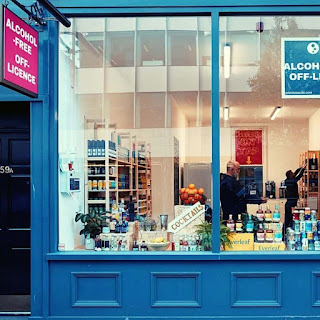
Continuing my theme of finishing off Dryanuary, last week's tasting at the Club Soda pop-up shop* was an interesting experience - and also a reminder of just how mixed-up AF attitudes can be. It has the feel of an off-licence, with wine, beer and spirits sections, yet contains almost no alcohol, the drinks being between 0.0% and 0.5% ABV. 

Just as the shop resembles an off-licence but isn't one, the drinks trade people I met there described some of the odd things that arise when assumptions about "beer" collide with not actually being alcoholic. 

For one, it was a big bonus - at least, it is in his company's US market. One of the legacies of Prohibition is that brewers can't normally sell direct to the public outside their taprooms, but must instead go through distributors. However well this was intended, it has become hugely distorting - in some cases, small brewers with their own bars downtown have to sell their beer to a distributor, then buy it back at an inflated price! 

When you add in the fact that some of those distributors are now under the control of big brewing groups, you can see how distorting this can be. Yet this being the outwardly puritanical USA, and with this system favouring the big brewers, getting rid of these rules is very hard.

But if you brew AF beer, those rules don't apply. Johnny, who reps in the UK for Connecticut's Athletic Brewing Co, explained that during lockdown, Athletic was able to sell by post where many others weren't. Similarly, US retailers are not allowed to import alcohol themselves, but must work through distributors, but AF products aren't restricted in the same way, so AF bottle shops can more readily offer a global range. 

Others had tales of opposite problems. For example, one of the Lucky Saint reps noted that Amazon still demands proof of ID/age when delivering AF beer. In fact, Amazon came up in discussion a number of times as a company that has difficulty recognising that AF beer is not actually an age-gated product. There's also problems with some social media platforms auto-deleting AF beer posts, presumably because their algorithms are too stupid to do more than go, "Mmm, beeeeer!" like some braindead robot Homer Simpson. 
And there's possible problems with UK regulations, with elements within the government trying to move towards a ban on 0.5% beers being labelled alcohol-free - even though several soft drinks can also contain up to 0.5% but will still be able to carry their AF label. 

There's even the suggestion that AF beers should have age limits and carry the "don't drink alcohol in pregnancy" warning! I fear this could well be the pernicious influence of the nannies, neo-prohibitionists and killjoys of the anti-alcohol fake charities. 

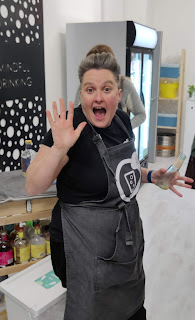
It's something to watch out for, anyhow - and it's going to be counter-productive if, like the AF drinks business, you want people to carry on drinking nice drinks but to drink less alcohol in the process. As Club Soda's Laura (right) pointed out, the bigger market share held by AF beer in countries such as Germany and Spain "didn’t happen by accident – all the relevant organisations there aligned on [supporting and promoting] it."

*Open until the end of February 2022. 

Saturday, 29 January 2022

Say hello to better alcohol-free beer

Dryanuary is nearly over for another year, thank goodness*, but the low-alcohol and alcohol-free (AF) beer business continues to grow both in volume and quality. It’s also shifted focus, as I recently learnt from meeting several AF brewery reps at a tasting session organised by the Beer Writers Guild earlier this month. 

The biggest change, according to Laura Willoughby, who runs the Club Soda pop-up AF shop where the tasting was hosted, is simply the range available. AF used to mean just lager or Weizen, but now there's ales, stouts, porters, even sours. More broadly there's also wines and drinks that mimic some of the character of gins and even whiskies. As she pointed out, "There's enough variety now for a whole off-licence, and if we'd had room we probably could have got another ten brands in!"

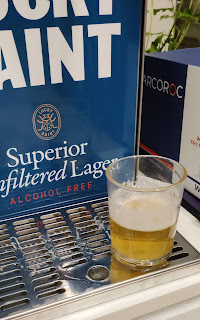
From a technical perspective, the biggest AF innovation is quite simply the dispense method – it used to be you’d only ever see AF beers in bottles or cans, but it’s increasingly common now to find them on tap. For example Heineken has a special tap for its 0.0% lager, Brewdog has been making a big feature of its AF products and last year ran what it claimed was the world’s first alcohol-free beer bar, and new brand Lucky Saint now has its 0.5% unfiltered lager on draught in hundreds of venues UK-wide.

Freshness is a challenge

Why has it taken so long to get AF beers on tap? Well, there are challenges, said Lucky Saint’s Jimmy Adams: “The first thing is the line has to be cleaner – we have our own technician now to help with that. The second is the length of time it sits on the bar – we really need a keg sold in a week for freshness and quality.”

He added that the latter is a particular problem when a bar first offers AF beer on draught, as it can take four to six weeks before customers realise it’s there and start to order it regularly. Get past that though, and things can pick up. 

“We find we’re doing 10% of the house lager [volume] in some bars,” he said. “The operator needs to understand they’re not going to sell six kegs of it a week, but at the same time, 55 pints of alcohol-free is going to be more profitable for them than 55 pints of house lager.” 

“People who normally drink alcohol are more fussy over their AF choice,” added Laura. “Drivers for example often like to have one regular beer, then switch to AF. Sometimes it’s the AF drinker in the group who dictates where the group goes, because of the good AF choices.” 

Brewdog rep Ben agreed on the potential for draught AF sales. “It can be 10% [of volume], or up to 16% or 17% in some bars,” he said. “Plus, people stay longer with AF and they spend more.”

Battling the nannies

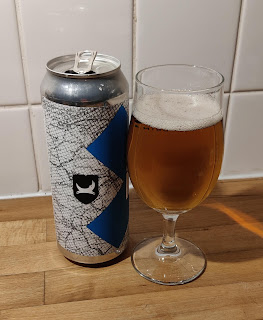
Draught Elvis AF in a take-away can

Think what you want of Brewdog’s top management and its company culture, but the brewery has invested a lot in its AF ranges since the debut of Nanny State. That was originally launched at 1.1% ABV as a retort to the frankly idiotic attempt by the nannies of the Portman Group in 2009 to ban its 18.2% Tokyo* Imperial Stout.

However, Nanny State quickly acquired fans before being relaunched at 0.5%, the legal max for being labelled non-alcoholic. Fast forward a few years, and Brewdog has an entire stable of AF beers available both canned and on draught. It recently added one more, in the shape of Elvis AF, and Ben had samples for us. Sadly, while it was pleasant enough drinking, it’s almost completely unlike Elvis Juice – sure, there’s fruit and beery notes in there, but they’re way too indistinct.

Back on the innovations front, I was surprised to discover that, despite all the work on low-alcohol yeasts and the like, there’s still brewers dealcoholising. Although in the case of Lucky Saint, its Bavarian brewers clearly know what they are doing. They use vacuum distillation then blend regular beer back in to add a little body and return the beer to 0.5%.

This also seems to be the kind of technique that’s allowed the big brewers to offer 0.0% beers – check on Ratebeer or Untappd and there’s a whole raft of these now. It’s not a cheap technology to get into, by all accounts, but if you want to sell in some parts of the world it’s your best bet.  

*I’m not a fan of the whole Dryanuary schtick, as – in normal years, at least – it hits pubs and bars when they can least afford it, in the post-Xmas lull. Maybe with more and better AF options it could be less of an issue, but that’s a big ‘maybe’. 

Monday, 6 December 2021

Mad scientists take on low-alcohol beer brewing

One of the great things about beer and brewing is that there’s always something more to learn, and rarely is that more true than of the fast-evolving non-alcoholic and low alcohol – NoLo, or sometimes LNA – segment. 

I’ve written a couple of times before about the improving quality of British low-alcohol beer and the ensuing NoLo sales growth but only touched lightly on how they’re made. How did we get from the thin and slightly soapy de-alcoholised lagers of yesteryear to a world where we have enjoyable non-alc IPAs and Porters?

And sure enough, the production of modern NoLo beers turns out to be a fascinating business, on a par almost with the companies chasing synthetic meat or dairy-free vegan cheese. On the one hand, in beer, meat and cheese, we humans have discovered things that are delicious and relatively easy to produce. 

But on the other, we’ve come to recognize they have major flaws. While nourishing and tasty, they can also contribute to poor health, and both meat and dairy production can be environmentally destructive, whether in terms of degraded grazing land or the greenhouse gases that animals emit. 

Thankfully beer does not suffer so much on the latter score. Yes, it requires lots of energy to boil and mash, but that can be renewable for instance. And breweries are much better now at reducing their water usage, although even the most efficient still consume two or three pints of clean water for every pint of beer. 

Bye-bye Saccharomyces

NoLo brewers have often been a bit cagey on their processes though, referring only to “special yeasts” and the like. So it was great to get deeper into the topics earlier this year with John, a haematology doc by day and one of the self-proclaimed ‘mad scientists’ behind new brewery Sheep in Wolf’s Clothing by night. 

“It’s hard to grow organisms that don’t eat sugar, to brew beers that don’t taste like either hopped water or wort,” he said, when we met at this year's Brew//LDN. “We’ve been isolating yeast from for example Kombucha [fermented tea] and the National Collection of Yeast Cultures. You want a yeast that doesn’t eat maltose but will eat glucose, then you adjust the wort to be drier.

“You want it to work slowly, producing esters and other flavour compounds. Fermentation is what makes beer taste like beer, but you want it to ferment with the least alcohol and the most flavour.” It certainly worked well for their zesty and light 0.5% Easy Rinder citrus hefeweizen, made with real mandarin orange rind. 

Growing interest in lower-strength 'table beers' 

John added though that’s it’s not all about 0.5%ers: “2.8% is still important – that’s the tax break*. We have three beers there.” I tried a couple of these, I wasn’t taken by the Short Stack blueberry wheat beer, but the whisky barrel-aged Black Lager was very good, starting light, with classic Schwarzbier notes of coffee and ash, then filling out as the whisky comes through. (They blend back with fresh beer, of course, to keep it at 2.8% despite the whisky.)

And he said it’s easier to make gluten-free beers if they’re non-alc, too, because the grist – the amount of malt used – is smaller. “They’re already down to 30ppm of gluten so there’s less to take out.” Like many brewers, they then use enzymes – Brewer’s Clarex – to take out as much as possible of the remainder. 

If there’s a downside, said John, it’s pricing. Sure, the alcohol duty is lower, “but the ingredients are the same whether you brew to 5% or 0.5%.”

*UK beer duty is approximately halved for low-strength brews (between 1.2% and 2.8% alcohol - under 1.2% there's no duty payable) and increased for beers over 7.5%. 

Wednesday, 3 November 2021

IPA-lovers subscription scheme offers limited editions and shares

Do you love IPAs? Do you love IPAs enough to subscribe to and crowdfund a new brewer who will make nothing else – and will send you half a dozen cans of a new limited-edition IPA every month?

That’s the proposal for Standard Brew Co, a new venture from Milo Oddi, the former head brewer for London’s Beer+Burger chain. So far he’s done three New England IPAs – two 6% prototypes and the first subscription beer at 4%. 

He says though that from here on each month’s subscription brew will be a different IPA type, from Session IPAs to Triple IPAs “and everything in between.” No word yet on whether that includes the likes of Sour IPA or Black IPA – I’m doubtful, but you never know!

Certainly the first of those subscription beers, cunningly named IPA #003, is a very tasty start. Tropical, juicy and hoppy-dry, it features Citra Cryo and Mosaic hops, adds wheat and oats for a soft and fluffy body, and uses the popular Verdant NEIPA yeast. It is, as they say, very crushable.  

Why six of the same brew? “It has always been about sharing,” Milo says. “Whether that be sharing the beer at garden parties, taking it to friends’ dinners or even gifting it as presents.” 

If this sounds like your bag – if you’re already buying six-packs or even 24-packs of IPAs, say – there’s an extra hook. Subscribe for 12 months at £25 a month (including shipping), and as well as six 440ml cans each month, he’ll also give you twelve shares in the company, making you a co-owner.*

You can read more, and sign up, on the Standard Brew Co website. There’s also a special code “LOVEIPA” to get your first month free. 

Now, who’s going to start something similar to brew all different kinds of Porters and Stouts?? đŸ˜

*Of sorts - these shares are non-transferable and non-voting.

Monday, 1 November 2021

No more cask Fuller's Vintage this autumn

 If, like me, you look forward to a few glasses - or even pints - of Fuller's Vintage Ale each autumn, you're going to be sadly disappointed this year. Unless, that is, you caught it at the London Craft Beer Festival back in August.

Cask-conditioned Vintage Ale 2020
The background is that, while most of each year's Vintage Ale brew goes into bottles, Fuller's always puts some into casks. A few of these go to beer festivals local to the brewery, and most go to a small number of cask-led Fuller's pubs. A couple of the Fuller's pubs I visit normally get two or three each, which they serve from around October onwards - last years' was especially delicious. 

This year, however, there has been a problem. I heard from multiple sources that the casks had been sent out, but had then been recalled by the brewery. So I asked for more information and this is the reply I received: 

"We released a very small quantity of Vintage Ale 2021 on cask this year at London Craft Beer Festival in August and a handful of pubs during Cask Ale Week.

"Unfortunately, as time progressed, we weren’t completely happy with how some of the Vintage Ale 2021 casks were tasting when we sampled them. 

"There were a few cases of low cell counts, which left them susceptible to oxidation. While they posed no safety risk, we did recommend to the pubs that still had stock to withdraw from sale. 

"Hope that is helpful to know. We’re sorry for any disappointment caused. Our priority is always ensuring consumers enjoy our beers and experience cask at its best."  

It's hard to judge from the outside, but it looks like something went badly wrong while the beer was being prepared for cask. This involves filtering the beer and then reseeding it with the right amount of fresh yeast for that secondary conditioning in-cask. 

It all seems rather odd. Yes, it can be a ticklish process to get right, but Fuller's brewers should have plenty of experience here, and under normal circumstances you then have experienced cellar staff in the pubs who are able to make the final quality decision. 

Yet the reports I've seen from LCBF suggest the Vintage Ale was unusually sweet this year. Could someone have forgotten to reseed it with fresh yeast? Or what else might have gone wrong? Either way, it is disappointing - but still, better no beer than bad beer, I guess. 

Tuesday, 19 October 2021

You won't be Haacht off by these Belgian classics

Haacht is certainly a name I recognised, not just as the brewer of M&S Belgian Lager(!) but as one of the older family breweries in Belgium. So when I spotted its bar at this year’s Brew//LDN show, I was curious: with all the problems over Brexit red tape and with fewer mainland lorries coming over to the UK, why would a Belgian brewer be entering the UK market right now?

Haacht's Matthew Langley at Brew/LDN
“Haacht sees the UK as the biggest European beer market, but also a complex one,” explained UK country manager Matthew Langley (left). “The UK has so many different beer categories, it’s not at all like Belgium. Setting up a subsidiary here is a real commitment to the UK market, and we have to set up now to smooth the imports – everybody is really confused about the rules.” 

The brewery has three main families of beers, plus a few individual brands and outliers, such as its Belgian Pilsner, Primus. Super 8 is the more mainstream line – Export is a pale lager, Flandrien is a strong (6.4%) blonde ale, Blanche is as you might guess a Witbier, and then there’s IPA (6%), which is more traditionally English in style than American or Belgian. For now, only the IPA and Flandrien are coming to the UK.

Then there’s the Charles Quint line of three strong beers, which aren’t coming over, and thirdly, the family that Belgian beer lovers are most likely to recognise which is the Tongerlo abbey beers. 

These remind us that, while Trappist beers can only be brewed in the abbey precincts, almost all ‘abbey beers’ are actually brewed commercially, with the brewer having licensed or bought the name. Here, there’s three regulars – Tongerlo Lux is the Blond (6%), then the Dubbel is Tongerlo Nox (6.5%), and lastly there’s the Tripel, Tongerlo Prior (9%).

So what of the beers? 

Haacht had Super 8 IPA on draught at the show – deep chestnut-brown and dry-sweet, with notes of toasty malt, biscuit and grapefruit, it’s a very nice modern take on a classic English IPA. Flandrien on the other hand is more classically Belgian in style – a little candy sugar and spicy hops, its sweetness balanced by a drying alcohol warmth. If you like Leffe, say, you’ll probably like this. 

Tongerlo Nox/Brune
Why two Belgian Blond ales in the mix? Well, Tongerlo Lux is noticeably different from Flandrien – sweetish, yes, but with estery notes of melon and spiced apple, and a crisp dry edge. It’s lovely, but then the other Tongerlo beers are even better. 

Nox (right) is dark and plummy-sweet, lightly roasty and ashy, with hints of wine and cocoa, and a drying hoppy bitterness. Prior Tripel is fruity and lightly floral, full-bodied and estery-smooth, with hints of Weissbier-like banana and lemon, and a boozy warmth balanced by peppery drying hops. 

All in all, it’s a pretty solid line-up. Nothing too crafty, but well-made examples of Belgian – and English – classics. Langley adds that, in Belgium at least, Haacht also has several seasonals such as a Belgian Saison and a Tongerlo Christmas beer. “They’re also going to bring out a Stout,” he added. “On one level they’re very staid, and on another they continually surprise me!”

Sunday, 17 October 2021

It's Oktober, time for a Festbier

It’s Oktober, and these days, that means Oktoberfestbier*! Finding a decent Festbier used to be a bit of a trial outside Germany – and more particularly, outside Munich**. That’s changed now though, thanks to North London’s music-inspired Signature Brew, and the latest iteration of its Festbier, Luftballon.

When I tried last year’s brew of Luftballon, it seemed just a little light for the style, but this year’s release is smack on target. It’s smooth and malty-sweet, lightly bready and toasty, with drying hoppy notes and a mild bitterness, mouth-filling yet somehow also light and not cloying. Just the ticket, both for Oktoberfest and more generally for an autumn afternoon or evening...

*Or at least it does for the non-Americans out there – most American breweries that brew Oktoberfestbiers stick to a variation on the amber-brown MĂ€rzen style, whereas the Bavarians almost all switched about half a century ago from MĂ€rzens to golden Festbiers. 

To explain further, MĂ€rzen was more or less a stronger version of what we now know as Vienna lager – the amber beers that succeeded Dunkel lagers as the mainstream drinker’s choice. Meanwhile, Festbier is basically a strong version of Munich Helles, the golden beer that in turn displaced Vienna amber in the Bavarian public’s affections. 

And yes, I know that if the Munich Oktoberfest had been running this year it would be over by now...  

**The six Munich Oktoberfestbiers are all fine brews and eminently quaffable, but having a choice is nice – and there’s always something a bit uncomfortable about a cartel. (The Big Six Munich brewers are the only ones legally allowed to use the term ‘Oktoberfestbier’ and sell it at the Wiesn. In my opinion, if that isn’t a cartel then I don’t know what is!) 

Still, hopefully next year Munich will get that more choice too, as upstart Giesinger BrĂ€u has reportedly broken through at last and got permission to become the seventh member of the Oktoberfestbier gang, alongside Paulaner & Hacker-Pschorr (both owned by Schörghuber), SpatenbrĂ€u & LöwenbrĂ€u (both now AB-Inbev) & the two independents Augustiner & HofbrĂ€u-MĂŒnchen.